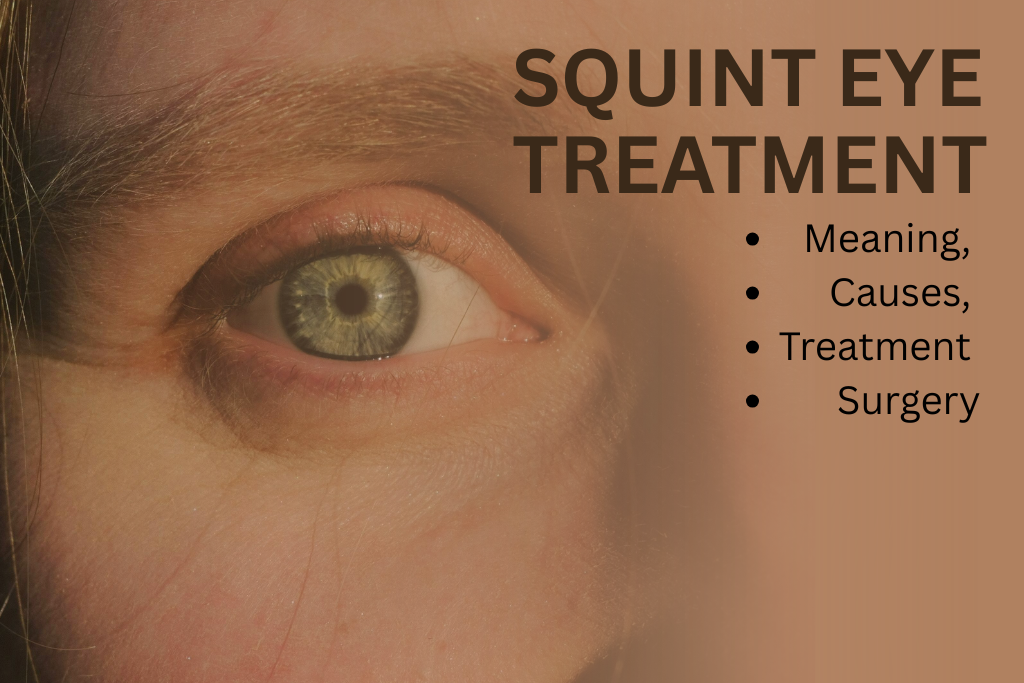
The right treatment for people whose eyes point in different directions should begin with Squint Eye Treatment. The medical community uses strabismus as the official name for this eye disorder. Some individuals first recognize this condition during their childhood years, but others experience it as an adult because of insufficient eye muscle strength or vision problems, nerve damage, or physical trauma.
Most people can receive squint treatment because its existence extends through their entire lifespan. When doctors identify an eye condition at its earliest stage, they can treat it to achieve better eye alignment results and improved vision abilities, which often leads to an increase in confidence for patients.
What exactly does a Squint Eye (Strabismus) mean?
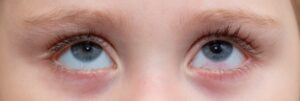
The condition of a squint eye occurs when both eyes fail to maintain proper alignment. The condition allows one eye to maintain a direct gaze while the other eye moves:
- Inward (crossed eye)
- Outward
- Upward
- Downward
The brain develops a pattern of neglecting visual input from the misaligned eye since it uses this strategy to prevent seeing two images at once. The condition can progress to lazy eye (amblyopia), which results in permanent vision loss.
The Squint Eye Treatment needs immediate attention because people who develop this condition during childhood require immediate treatment of their condition.

Common Signs You Should Not Ignore
Some squint cases are obvious, while others show only minor signs. Look out for:
- A person who is constantly rubbing their eyes
- A person who needs to tilt their head to achieve proper focus
- Double vision (common in adults)
- Problems with understanding spatial distance
- Headaches or eye strain
If any of these signs are present, consult an eye specialist for Squint Eye Treatment as early as possible.
What Causes Squint Eyes?
Multiple factors lead to squinting. The main causes include:
1) Refractive Errors
- When a child has uncorrected farsightedness, the eyes may over-focus, leading to inward turning. The treatment for this condition requires the use of lenses that correct squinting eyes.
2) Weak Eye Muscle Control
- The eye movements become disjointed because the two eye muscles fail to function together.
3) Lazy Eye (Amblyopia)
- The brain establishes a preference for the stronger eye when one eye possesses more strength than the other.
4) Family History
- Squint disorder shows a tendency to pass through generations, particularly during childhood.
5) Injury or Neurological Causes
- Adults may develop squint due to trauma, stroke, thyroid eye disease, or nerve weakness.
Why Early Squint Eye Treatment Matters
The biggest risk of delaying Squint Eye Treatment is permanent vision loss in the weaker eye. The brain needs early eye correction because children’s visual systems develop quickly, which helps them learn to use both eyes together.
The untreated squint in adults results in intensified double vision and eye strain while creating social interaction challenges.
Diagnosis: How Doctors Check Squint
To plan the correct Squint Eye Treatment, an eye specialist may perform:
- Vision testing
- Eye alignment tests
- Refraction test (to check spectacle power)
- Eye movement examination
- Binocular vision and depth perception evaluation
The treatment depends on the type, severity, and cause of squint.
Options for Squint Eye Treatment (Surgical and Non-Surgical)
1) Spectacles or Lens Correction
In many cases, squint improves considerably with glasses too. Generally, a good lens for squint eye can help fix focus problems and reduce eye turn inwards in young children.
Some patients may need:
- Regular glasses
- Bifocal lenses
- Prism Lenses (usually used to eliminate double vision in adults)
Wearing a correct lens to correct a squinting eye can prevent eye strain and, in some cases, eliminate the need for surgery.
2) Eye Patching Therapy
- If lazy eye is also found, the doctor may advise covering the stronger eye to bring the weaker eye into action. This is a very common part of Squint Eye Treatment for kids.
3) Vision Therapy (Eye Exercises)
Some squint types may be helped with guided eye exercises. Vision therapy can improve eye coordination and focusing ability.
It is often used:
- After surgery
- Along with glasses
- In mild or intermittent squint
4) Botox for Squint (Selective Cases)
- In certain circumstances, botulinum toxin injection can be used to relieve spasmodic eye muscles. Not all patients are qualified to receive the treatment; however, it can be effective in certain types of squint.
When is Squint Eye Surgery Needed?
Squint eye surgery becomes necessary when patients fail to achieve proper eye alignment through the use of glasses, patching, and therapy methods. The medical field recommends surgical intervention under these specific circumstances:
- Patients display a significant squint angle
- Patients maintain their misalignment despite using glasses
- Patients experience double vision, which disrupts their daily activities
- Patients experience emotional distress because of their appearance
How Squint Eye Surgery Works?
- The surgeon, during squint eye surgery, changes the eye muscle structure through two possible methods
- The surgeon reduces the strength of a muscle that has become overly tense
- The surgeon develops the strength of a muscle that has become excessively weak
- The surgeon relocates muscles to establish an optimal equilibrium position
- The procedure involves changing only the exterior eye muscles while maintaining the complete eye structure.
Most hospitals use general anesthesia to perform squint eye surgery on children, while adults undergo the procedure with local anesthesia in certain situations.
Lens for Squint Eye: Does it Really Help?
Yes, a lens for squint eyes is often one of the first and most important steps: It helps by:
- Correcting Focusing Errors
- Reducing eye strain
- Supporting alignment improvement
- Assisting with the control of intermittent squint
- Supporting vision development in children
In many cases, the appropriate lens for squint eye can reduce the squint angle and delay or avoid surgery.
FAQs on Squint Eye Treatment
1) Is Squint Eye Treatment possible without surgery?
Yes. The Squint Eye Treatment can include glasses, a lens for the squint eye, patching, and vision therapy. In some cases, surgery could be required only when glasses do not help.
2)How successful is squint eye surgery?
Generally, squint eye surgery is successful, keeping in mind that a patient may require a second or even third surgery depending on the type of squint.
3) Can Lens for Squint Eye completely fix the Problem?
An eyeglass lens for the squint eye can fully cure squint if its degree is not high and if the squint is caused by farsightedness. Otherwise, the lens can minimize the squint, and other treatment measures can be used.
Conclusion
Squint Eye Treatment is not only about the cosmetic appearance, but also to safeguard the vision, develop the coordination ability of the eye, and prevent other complications like lazy eye and double vision. From the best lens for squint eye to patching, vision therapy, and surgery for squint eye, the options are vast and reachable.
If you or your kid or you are experiencing the symptoms of squint, don’t wait to get the symptoms checked, as timely Squint Eye Treatment can greatly affect the quality of vision or life.